When Effort Stops Working
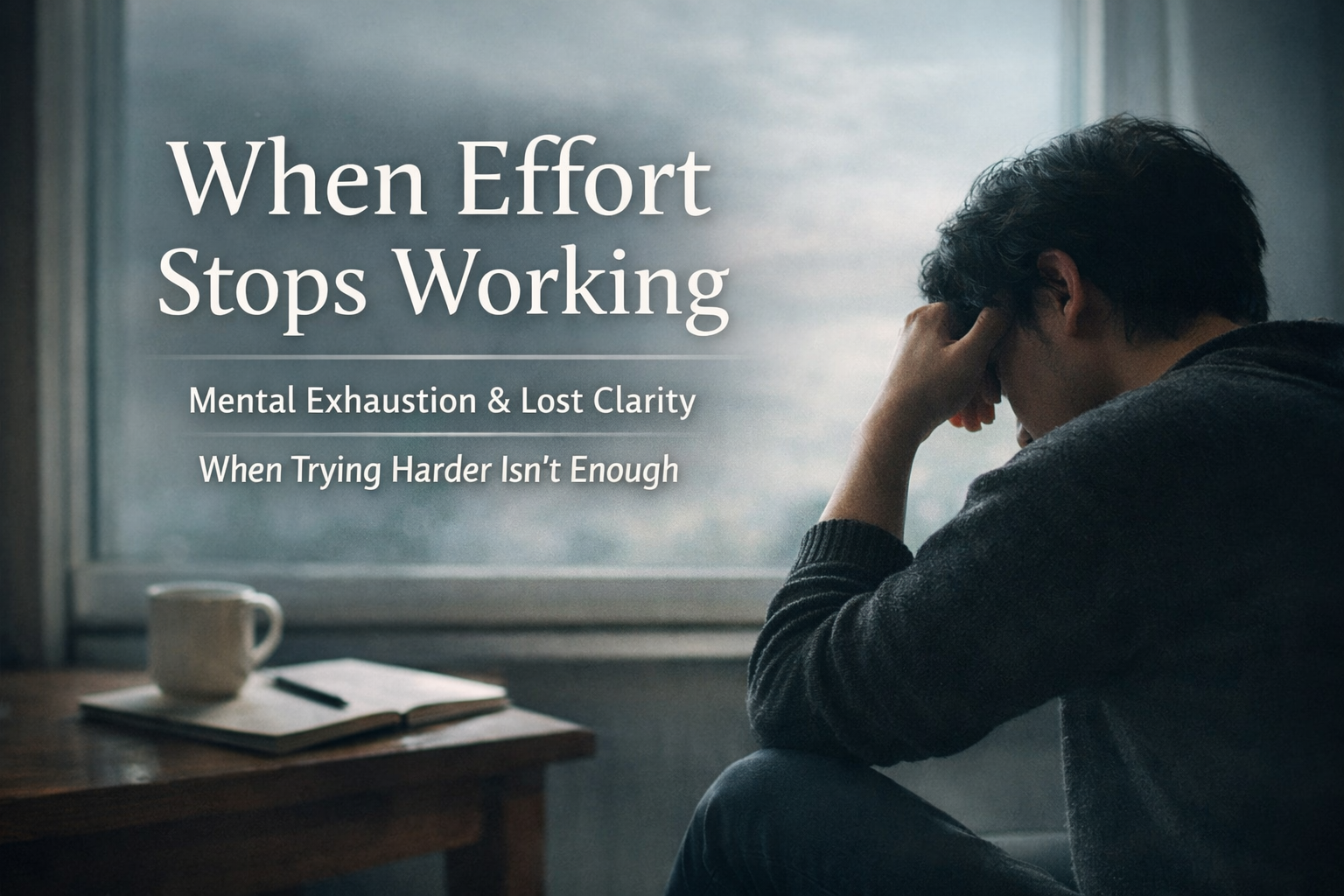
There is a phase in life that doesn’t come with warning signs.
You don’t collapse.
You don’t quit.
You don’t fall apart.
You continue.
You wake up.
You show up.
You try.
And yet, something feels off.
Not dramatic enough to explain to others.
Not serious enough to justify stopping.
Just a quiet sense that effort no longer moves things the way it used to.
Most people don’t talk about this phase because it doesn’t look like a problem. From the
outside, life appears functional. From the inside, it feels strangely heavy.
When effort once made sense
For a long time, effort works because life is structured to reward it.
You study more, results improve.
You work harder, progress follows.
You stay disciplined, things move forward.
Effort feels logical. Predictable. Fair.
So when it stops working, confusion sets in.
You don’t immediately question the system.
You question yourself.
You assume:
- you’re losing discipline
- you’re becoming lazy
- you’re not pushing hard enough
That assumption quietly adds pressure to an already strained system.
The exhaustion nobody names
This isn’t ordinary tiredness.
It doesn’t disappear with rest.
It doesn’t improve with motivation.
It doesn’t announce itself clearly.
You can still function, think, decide, and perform — but everything feels heavier than it
should.
Thinking takes longer.
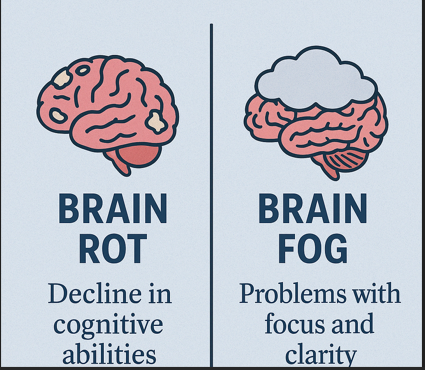
Decisions feel foggy.
Small tasks drain disproportionate energy.
Because you’re still functioning, you dismiss it.
“Others handle more.”
“I should manage too.”
That belief keeps the exhaustion unnamed — and unaddressed.
Why advice starts to irritate
This is often the stage where advice begins to feel unbearable.
Not because it’s wrong.
But because it assumes a problem you don’t have.
Most advice is designed for people who lack effort or discipline.
But effort isn’t your issue.
You’re already trying.
Already thinking.
Already carrying responsibility.
So when someone says “push harder” or “be more positive,” it doesn’t inspire action — it adds
weight.
Instead of clarity, you feel guilt.
Instead of motivation, you feel pressure.
That’s not resistance.
It’s a signal.
The hidden pressure beneath everything
What makes this phase particularly draining is the pressure you don’t consciously notice.
Pressure to:
- live up to past potential
- meet expectations you never agreed to
- remain the capable one
- keep things together quietly
This pressure doesn’t shout.
It hums constantly in the background.
Even during rest, part of you is monitoring yourself — evaluating, measuring, anticipating.
You don’t relax fully.
You manage yourself.
Over time, that internal management becomes exhausting.
Why pushing harder makes it worse
When effort stops working, the instinctive response is to increase force.
More discipline.
More structure.
More self-control.
That works for physical fatigue.
It backfires for mental exhaustion.
Mental clarity doesn’t return under pressure.
It returns when pressure reduces.
Trying to force answers from a tired mind is like demanding precision from static.
The harder you push, the noisier things become.
The mistake of rushing clarity
Many people take a short break, feel a little relief, and immediately try to restart life.
New plans.
New goals.
New urgency.
That rush feels productive — but it skips a crucial phase.
Stability.
Before clarity returns, the system needs to settle.
Thoughts slow down.
Reactions soften.
Urgency fades.
This stage often feels uncomfortable because it’s quiet and neutral. People mistake it for
stagnation.
It isn’t.
It’s recalibration.
How your life is shaped? Do ou know who is responsible for your life
https://kvshan.com/2026/01/you-shape-your-life-more-than-you.html
What clarity actually feels like
Clarity doesn’t arrive as a dramatic breakthrough.
It arrives quietly.
As fewer internal arguments.
As less urgency to decide everything.
As comfort with not knowing — temporarily.
You don’t suddenly know what to do with your life.
You simply stop fighting yourself.
That’s when movement becomes possible again — naturally, without force.
This isn’t failure. It’s transition.
The hardest part of this phase is not the exhaustion itself.
It’s the fear that something has gone permanently wrong.
That you’ve lost your edge.
That you’ll never feel driven again.
That you’re falling behind while others move forward.
But what’s often happening is simpler — and gentler.
You’ve outgrown a way of living that relied solely on pushing.
Effort hasn’t failed you.
It has reached its limit.
What comes next isn’t laziness or collapse.
It’s alignment.
And alignment always begins quietly.
How your Heart and Brain communicate with each other and with others outside your body sometimes without you knowing
https://kvshan.com/2026/01/heartbrain-coherence-how.html
A closing note
If you’re in this phase, you don’t need to rush your way out of it.
You don’t need to fix yourself.
You don’t need to reinvent everything.
You don’t need more pressure disguised as motivation.
Sometimes the most intelligent response is to stop forcing movement — and allow clarity to
return on its own.
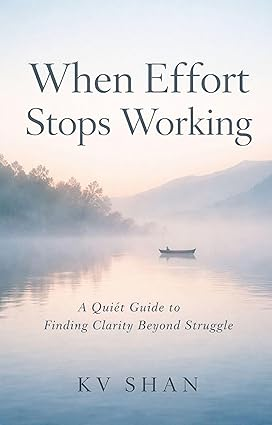
I recently put together a short guide around this exact phase — not as motivation or
instruction, but as a quiet space to understand what’s happening when effort stops working.
I’m mentioning it only because some readers here might find it helpful.
No pressure.
Sometimes progress doesn’t begin with trying harder.
Sometimes it begins with stopping. You may get it from amazon using the link below.