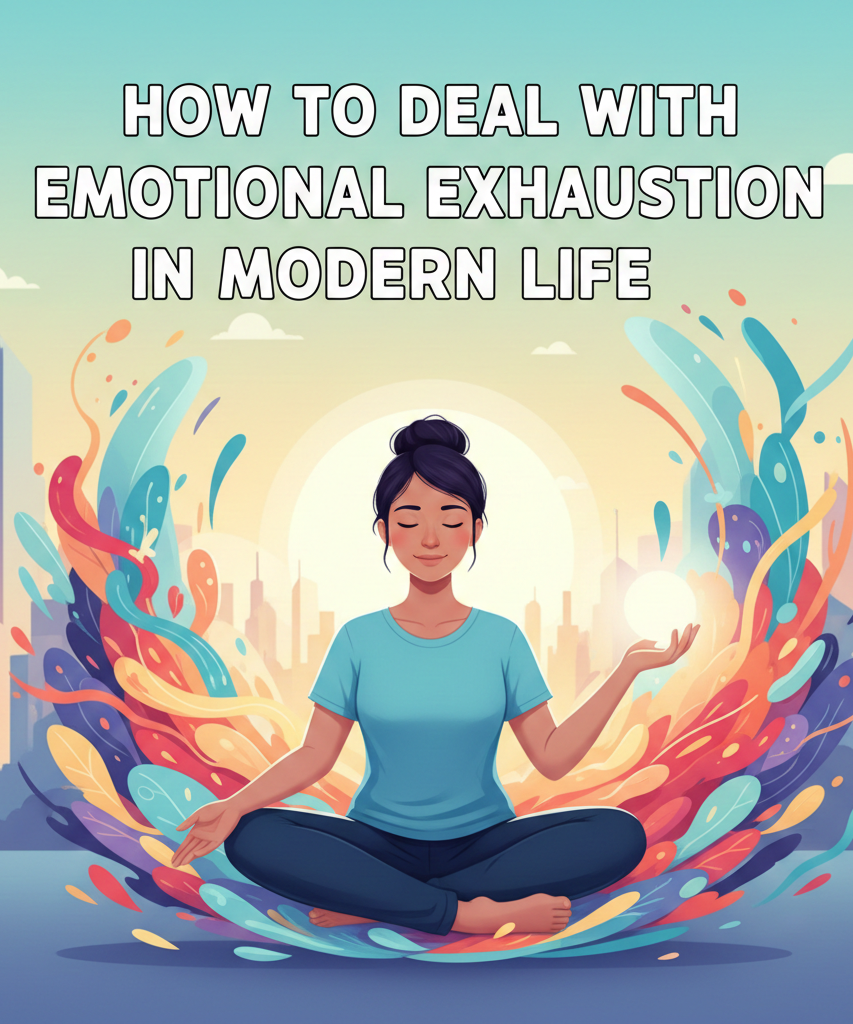
How to Deal With Emotional Exhaustion in Modern Life
Emotional exhaustion is not weakness.
It is what happens when a human nervous system is asked to live like a machine.
Most people think exhaustion comes only from physical overwork. In reality, many people
who are emotionally exhausted are not doing “too much” — they are holding too much.
Unexpressed feelings.
Unresolved stress.
Constant pressure to perform.
Silent worry about the future.
The need to appear fine.
This guide explains what emotional exhaustion really is, why it happens, how to recognize it
early, and how to recover in a practical, sustainable way.
What is Emotional Exhaustion?
Emotional exhaustion is a state of inner depletion caused by prolonged emotional stress,
mental overload, and unrelenting pressure.
It feels like:
-
You are “tired in your soul,” not just in your body
-
Small things overwhelm you
-
Motivation feels distant
-
You function, but you no longer feel alive
It is one of the core components of burnout, but it can also exist independently.
How Emotional Exhaustion is Different From Normal
Tiredness
| Normal Tiredness | Emotional Exhaustion |
|---|---|
| Improves with rest | Persists even after sleep |
| Physical heaviness | Emotional emptiness |
| Temporary | Chronic |
| Energy returns | Energy stays flat |
| Mind still hopeful | Mind feels dull or hopeless |
This is why people say:
“I sleep, but I don’t feel rested.”
Why Emotional Exhaustion Happens (Root Causes)
Emotional exhaustion builds slowly.
Most people don’t notice it until it becomes severe.
1. Constant Emotional Suppression
When you repeatedly hide what you feel to keep peace, meet expectations, or avoid conflict,
your nervous system stays in a state of tension.
Suppressed emotion doesn’t disappear.
It turns into fatigue.
2. Chronic Stress Without Recovery
Modern life creates continuous low-grade stress:
-
Deadlines
-
Financial pressure
-
Information overload
-
Work insecurity
-
Social comparison
Without proper recovery cycles, stress becomes exhaustion.
3. People-Pleasing and Over-Responsibility
If you habitually:
-
Say yes when you want to say no
-
Carry other people’s emotional burdens
-
Feel guilty for resting
Your emotional resources drain faster than they refill.
4. Lack of Meaningful Rest
Scrolling, binge-watching, and passive entertainment do not restore emotional energy.
They distract the mind but do not reset the nervous system.
5. Identity Pressure
When your self-worth depends on:
-
Productivity
-
Achievement
-
Being strong
-
Being reliable
You never feel allowed to stop.
Early Warning Signs of Emotional Exhaustion
Recognizing early signs prevents collapse.
Mental Signs
-
Difficulty concentrating
-
Constant mental fog
-
Loss of creativity
-
Indecisiveness
Emotional Signs
-
Irritability
-
Emotional numbness
-
Loss of joy
-
Increased sensitivity
Physical Signs
-
Headaches
-
Tight chest or jaw
-
Shallow breathing
-
Digestive issues
The Hidden Cost of Emotional Exhaustion
If left unaddressed, emotional exhaustion leads to:
-
Burnout
-
Anxiety and depression
-
Relationship breakdowns
-
Reduced job performance
-
Loss of identity and purpose
Most dangerously, it creates a false belief:
“This is just how life is.”
It is not.
A Common Daily Pattern That Creates Exhaustion
Many people live like this:
-
Wake up tired
-
Rush through the morning
-
Suppress irritation and stress
-
Perform at work
-
Absorb emotional tension
-
Scroll at night
-
Sleep unrestfully
-
Repeat
This cycle slowly erodes emotional resilience.
How to Recover From Emotional Exhaustion (Practically)
Recovery is not about quitting life.
It is about changing how your nervous system experiences life.
1. Reduce Emotional Load Before Increasing Motivation
Do not start with productivity hacks.
Start with load reduction:
-
Fewer commitments
-
Less digital noise
-
Fewer emotional obligations
Energy returns when load decreases.
2. Start Micro-Recovery Rituals
Daily small rituals are more powerful than occasional vacations.
Examples:
-
10 minutes of quiet walking
-
5 minutes of slow breathing
-
Sitting without screens
-
Gentle stretching
These signal safety to the nervous system.
3. Externalize Emotions Daily
Write or speak what you are holding.
Questions to journal:
-
“What drained me today?”
-
“What am I not saying?”
-
“What do I actually need?”
Unexpressed emotion becomes exhaustion.
4. Rebuild Boundaries Gently
Start small:
-
Say no to one unnecessary thing daily
-
Leave one conversation early
-
Cancel one draining obligation weekly
Boundaries restore emotional integrity.
5. Change How You Rest
Rest is not inactivity.
Rest is:
-
Being mentally off duty
-
Being emotionally unguarded
-
Being free from performance
Choose rest that calms your body, not just your mind.
A Simple Daily Routine to Restore Emotional Energy
Morning (5–10 minutes)
-
Stretch lightly
-
Slow breathing
-
Set one gentle intention
Midday (2–5 minutes)
-
Pause and breathe
-
Ask: “What am I holding right now?”
Evening (10–15 minutes)
-
Write emotional dump
-
Do one calming activity
-
No screens before sleep
When Emotional Exhaustion Is a Signal
Sometimes exhaustion is not the problem.
It is a message that:
-
Your life structure is misaligned
-
Your job environment is unhealthy
-
Your relationships lack reciprocity
-
Your identity is performance-based
In these cases, lifestyle change is part of healing.
Final Perspective
Emotional exhaustion is not laziness.
It is a system overload.
Your nervous system is asking for:
-
Safety
-
Slowness
-
Expression
-
Boundaries
-
Meaningful rest
When these needs are met, energy returns naturally.
You do not need to become stronger.
You need to become kinder to your inner system.
This guide is for educational purposes and does not replace professional mental health support. If emotional exhaustion significantly interferes with daily functioning, seeking qualified help is recommended.
Explore the Resources page of the blog https://kvshan.com/p/resources_6.html