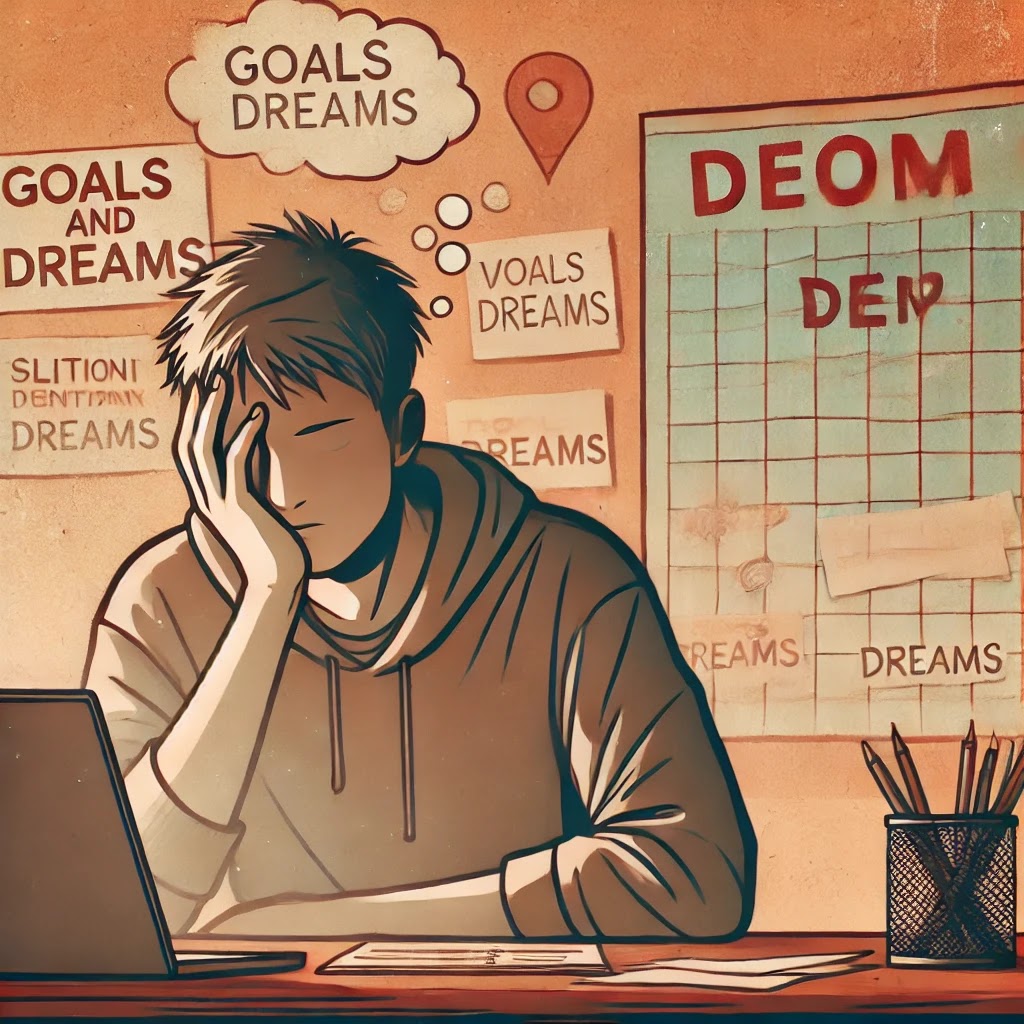
You look around and you find unwanted slop of info stuffing into your brain and mind overloading them through all of your senses slowly affecting your peace, decision making process, memory, and thus your daily life.
The world isn’t going to quiet down anytime soon. If you are waiting for external stability to finally find peace of mind, you are playing a losing game. The only real anchor left is the one you build inside.
How to Build Inner Stability in an Uncertain World

The world is no longer stable.
Careers are fragile.
Relationships are unstable.
Economies are unpredictable.
Information is overwhelming.
The future feels unsafe.
Most people are not anxious because something is wrong with them.
They are anxious because they are trying to build a stable life in an unstable world.
Inner stability is no longer a spiritual luxury.
It is a psychological survival skill.
This guide explains what inner stability really means, why it matters more than ever, and how to build it practically — without
denial, toxic positivity, or spiritual bypassing.
What Inner Stability Actually Means
Inner stability is the ability to:
Stay emotionally regulated during chaos
Think clearly under pressure
Recover quickly from setbacks
Maintain identity when life collapses
Act without constant fear
It does not mean:
You don’t feel anxiety
You don’t get sad
You don’t struggle
It means your inner system does not collapse every time life becomes uncertain.
Why the Modern World Is Destroying Psychological
Stability
Your nervous system was not designed for:
24/7 news cycles
Social media comparison
Economic instability
Career uncertainty
Constant notifications
Performance culture
This creates permanent low-grade threat perception.
Your body thinks danger never ends.
So it never fully relaxes.
A viral blog “Why are you here? Your Purpose of being in this World“
The False Strategy: Trying to Make Life Stable
Most people try to stabilize:
Income
Relationships
Status
Control
Plans
These are fragile.
External stability is temporary.
Inner stability is portable.
The 6 Foundations of Inner Stability
This is not philosophy.
This is nervous-system-level architecture.
One of the most read blogs – What happened to you when you carried “The Emotional
1. Nervous System Regulation (The Base Layer)
If your body feels unsafe, your mind cannot feel stable.
Daily practices:
Slow breathing (inhale 4, exhale 6)
Walking without phone
Stretching
Quiet time
A regulated body creates a stable mind.
2. Emotional Self-Containment
This means:
You feel emotions
You don’t become them
You allow sadness without collapse.
You allow fear without paralysis.
Method:
Name emotions
Breathe through them
Let them pass
Emotions are waves, not commands.
3. Identity Independence
Your identity must not depend entirely on:
Job
Relationship
Status
Productivity
When those collapse, so do you.
Build identity around:
Values
Character
Principles
Inner standards
Ask:
“Who am I even if everything collapses?”
That answer is stability.
4. Meaning Anchors
People without meaning break faster.
Meaning does not need religion.
It can be:
Responsibility
Healing
Creativity
Service
Growth
Spirituality
Meaning makes suffering survivable.
5. Psychological Boundaries
You cannot absorb the chaos of the world.
Limit:
News
Social media
Toxic people
Emotional dumping
Boundary = stability.
6. Daily Structure
Chaos outside requires structure inside.
Simple routines:
Fixed sleep
Morning grounding
Daily movement
Evening shutdown
Structure calms uncertainty.
A Real-Life Inner Stability Scenario
Imagine:
You lose your job
Your relationship ends
Your savings are low
An unstable inner system:
Panic
Collapse
Self-destruction
Paralysis
A stable inner system:
Fear is present
Sadness is present
But actions continue
Perspective remains
Identity remains
Same pain.
Different internal architecture.
The Inner Stability Loop (How It Builds Over Time)
You regulate your body
You process emotions
You act despite fear
You survive difficulty
You trust yourself more
This creates earned confidence.
Not fake positivity.
A 15-Minute Daily Inner Stability Routine
Morning (5 minutes)
Slow breathing
Set one intention
No phone
Midday (3 minutes)
Pause
Ask: “What am I feeling right now?”
Evening (7 minutes)
Journal emotional dump
Name one strength shown today
Prepare tomorrow’s tasks
When Inner Stability Requires Life Change
Sometimes instability is not internal.
It is environmental.
Red flags:
Abusive relationships
Toxic jobs
Unsafe environments
In these cases:
Stability = exit courage.
The Long-Term Benefit of Inner Stability
Inner stability gives you:
Emotional resilience
Decision clarity
Leadership presence
Calm authority
Psychological freedom
People with inner stability become:
Less reactive
More grounded
More trustworthy
Not aggressive power.
Quiet power.
Final Perspective
The world will not become safe.
Life will not become predictable.
Certainty will not return.
Inner stability is the new security.
You do not need to control life.
You need to become strong enough inside to face it.
And that strength is not loud.
It is regulated.
It is grounded.
It is steady.
Build that.
And no storm will ever fully break you.
This guide is for educational purposes and does not replace professional mental health support. If persistent instability or distress significantly interferes with daily functioning, seeking qualified help is recommended.
Topics that may interest you