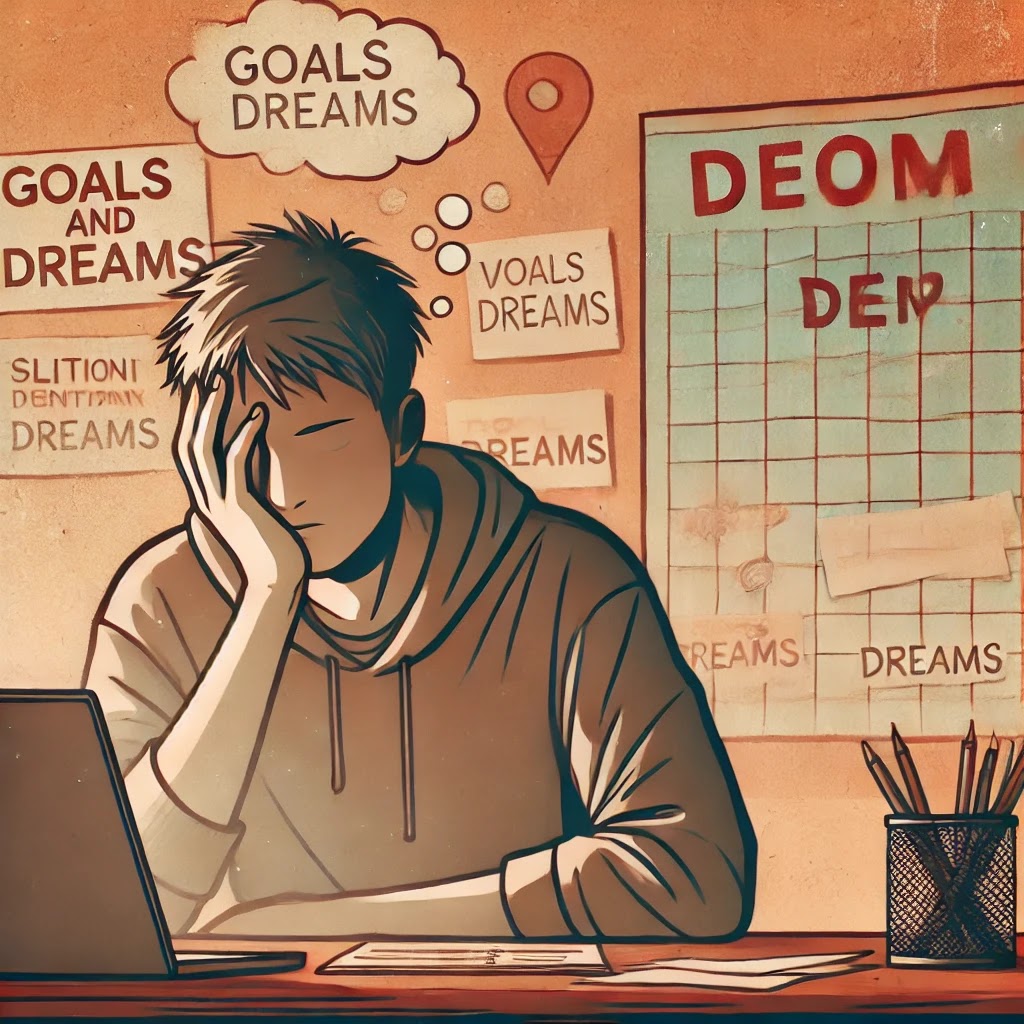
Beyond the Alley: Why Should You Dream Bigger Than Your Surroundings

There is a particular kind of frustration that many young people carry silently.
You study for years, complete your degree, attend interviews, send applications, wait for phone calls—and nothing seems to happen.
You watch someone else get a job. Someone else starts a business. Someone else moves abroad. Someone else seems to know exactly what they are doing with their life.
And slowly, a dangerous thought begins to grow inside you:
“Maybe I am not capable of much.”
This is an example of Limiting Belief
You stop dreaming.
Not because you don’t have ambitions, but because reality has taught you to be careful.
You begin to think about what is possible instead of what is meaningful. You choose a career because it is available, not because it excites you. You accept a small goal because a bigger goal feels embarrassing to say aloud.
This is where I want to tell you something:
Please don’t let a difficult season of your life decide the size of your dream.
You may be unemployed today.
You may have failed an examination.
You may have been rejected from ten interviews.
You may have no money.
You may come from a family that cannot support your ambitions.
You may not know what you are good at yet.
None of these things should have the power to tell you what your life can ultimately become.
How to Dream Bigger: Dreaming Big is Not Being Unrealistic
When we hear the words “dream big,” we sometimes imagine extraordinary things.
Become a billionaire.
Build a huge company.
Become famous.
Travel the world.
Buy a mansion.
There is nothing wrong with those dreams. But dreaming big is not necessarily about becoming famous or wealthy.
Dreaming big means allowing yourself to imagine a life larger than the one you currently see around you.
A student from a modest family may dream of becoming an excellent engineer.
An unemployed graduate may dream of building a business that employs twenty people.
A young mechanic may dream of owning a workshop.
A delivery worker may dream of starting a logistics company.
A teacher may dream of building a school.
A young woman who has never travelled outside her town may dream of becoming a professional and working internationally.
The dream does not have to impress anyone.
It only has to make you say:
“I want to become more than I am today.”
That is where growth begins.
Your Present Situation is Not Your Identity
One of the biggest mistakes young people make is confusing their current situation with their identity.
“I am unemployed.”
No.
You are a person who is currently unemployed.
“I failed.”
No.
You experienced a failure.
“I am not talented.”
How do you know?
Perhaps you haven’t developed the talent yet.
“I am from a poor family.”
That describes your starting point. It does not have to describe your destination.
There is an enormous difference between saying:
“This is where I am.”
and saying:
“This is where I will always be.”
The first is reality.
The second is a prediction.
And you should be very careful about making permanent predictions about your life based on temporary circumstances. There is someone keenly listening to every word coming out of your mouth as well as in your mind. It’s your subconscious. If you make an assertion negative or positive it will gather externally all the evidences in the world to make it true.
Students: Don’t Study Only for Marks
To students, I want to say something particularly important.
Your education should not merely prepare you to pass examinations.
It should prepare you to think.
Learn how money works.
Learn how businesses work.
Learn how technology is changing the world.
Learn how to communicate.
Learn how to sell.
Learn how to negotiate.
Learn how to write.
Learn how to speak confidently.
Learn how to solve problems.
Learn how to work with people.
Learn how to teach yourself something you don’t know.
A certificate can open a door.
But your ability to learn, adapt and create value is what can keep opening doors throughout your life.
Don’t ask only:
“What job will this degree get me?”
Also ask:
“What can I become because of what I am learning?”
That is a much bigger question.
Don’t Make Employment Your Only Dream
There is nothing wrong with wanting a good job.
A good job can provide dignity, stability, learning and financial security.
But if your only dream is:
“I want someone to hire me,”
you may be limiting yourself unnecessarily.
Ask yourself:
What problems can I solve?
What skills can I develop?
What can I create?
What can I sell?
Who can I help?
What can I build?
Could I eventually employ someone else?
Could I start something small?
Could I become so good at something that people actively seek me out?
The world does not only need job seekers.
It needs problem solvers, creators, entrepreneurs, teachers, craftsmen, technicians, artists, researchers, managers and leaders.
Perhaps your first step is getting a job.
That’s perfectly fine.
But don’t necessarily make the first step your final destination.
To the Unemployed Youth: Don’t Confuse Waiting With Preparing
Unemployment can be psychologically exhausting.
After enough rejection, you begin to lose confidence.
You wake up late because there is nowhere to go.
You spend hours on your phone.
You apply for jobs without enthusiasm.
You wait.
Tomorrow becomes another day of waiting.
But there is something you can control even when you cannot control the job market:
your preparation.
If nobody is hiring you today, use today to become more valuable.
Learn a skill.
Improve your English.
Learn digital tools.
Study sales.
Learn coding.
Learn design.
Learn accounting.
Learn a trade.
Understand artificial intelligence.
Start freelancing.
Volunteer.
Build something.
Help a local business.
Teach children.
Create a portfolio.
Talk to people.
Ask questions.
Do small projects.
The goal is not to pretend unemployment doesn’t hurt.
It does.
The goal is to make sure that unemployment doesn’t become inactivity.
There is a difference between being unemployed and being idle.
You can be unemployed and intensely productive.
Start Small, But Think Big, Dream Bigger
This is one of the most important principles of dreaming big:
Your first step does not have to look like your final dream.
Suppose you dream of owning a restaurant.
You may not have the money to open one today.
That doesn’t mean the dream is impossible.
Perhaps you start by learning to cook exceptionally well.
Then you sell ten meals.
Then fifty.
You understand customers.
You learn costing.
You learn purchasing.
You learn marketing.
You save money.
You reinvest.
Perhaps one day you open a small restaurant.
Then another.
The big dream did not begin when you opened the restaurant.
It began when you first allowed yourself to imagine it.
And then you took the first small step.
Think big. Start small. Learn quickly. Keep moving.
Don’t Be Ashamed of Small Beginnings
Many young people are afraid of starting small because they are worried about what others will say.
“What will my friends think?”
“What will my relatives say?”
“I have a degree. How can I do this small job?”
This is a trap.
There is dignity in honest work.
If you have to start with a small salary, start.
If you have to work from a tiny room, start.
If you have to sell your first product to five people, start.
If you have to spend six months learning before earning, learn.
The person who begins with five customers has something the person who is waiting for a perfect opportunity does not have:
experience.
Never be embarrassed by the size of your beginning.
Be concerned about the absence of a beginning.
Your Circle Matters
There is another uncomfortable truth.
Sometimes your biggest limitation is not your ability.
It is your environment.
If everyone around you says:
“People like us cannot do that.”
“You are dreaming too much.”
“Just get any job.”
“Don’t take risks.”
“Who do you think you are?”
you may eventually begin believing them.
You don’t have to reject your family or friends.
But you do need to find people who expand your thinking.
Read about people who built things.
Listen to people who have achieved what you want.
Find mentors.
Join communities.
Talk to people outside your usual circle.
Expose yourself to possibilities.
Your mind needs new evidence before it can imagine a new future.
Dreaming Big Requires Responsibility
But let me also make one thing clear.
Dreaming is easy.
Building is difficult.
You can spend an entire day watching motivational videos and still have nothing to show for it.
A dream without action is only fantasy.
If you want a different life, you have to accept responsibility for becoming the person capable of creating it.
That means discipline.
It means learning when you don’t feel like learning.
It means getting rejected and applying again.
It means saving when you want to spend.
It means waking up when you would rather sleep.
It means admitting that you don’t know something.
It means starting again after failure.
It means doing boring things repeatedly.
Big dreams demand small disciplines repeated for a long time.
Don’t Compare Your Beginning With Someone Else’s Middle
This is y favorite quote. You see this tendency among regular Youtube/FB/Insta watchers. Social media has made this problem worse.
You see someone your age buying a car.
Someone travelling.
Someone launching a company.
Someone getting married.
Someone announcing a promotion.
And you look at your own life and think:
“I am behind.”
But behind whom?
Life is not a race with one starting line and one finish line.
People begin with different resources, different families, different opportunities, different responsibilities different regions and different obstacles.
Your job is not to reproduce somebody else’s life.
Your job is to discover what your life can become.
Instead of asking:
“Why am I not where they are?”
ask:
“What can I do today that my future self will thank me for?”
That is a much healthier question.
Give Yourself Permission to Imagine
Perhaps the greatest tragedy is not failing to achieve a dream.
Perhaps it is never allowing yourself to have one.
Some young people have become so practical that they have forgotten how to imagine.
They say:
“I’ll take whatever I get.”
“Let me just survive.”
“I don’t expect much.”
“I don’t want to get disappointed.”
I understand why.
Hope can be frightening when life has disappointed you repeatedly.
But protecting yourself from disappointment by eliminating ambition also eliminates possibility.
You are allowed to want more.
You are allowed to imagine more.
You are allowed to change direction.
You are allowed to begin again at twenty.
At twenty-five.
At thirty.
Even later.
Your life does not expire because your first plan failed.
So, What is Your Big Dream?
Forget what sounds impressive.
Forget what your neighbours expect.
Forget what your relatives think you should become.
Sit quietly and ask yourself:
If fear were not controlling me, what would I attempt?
What would you learn?
What would you build?
Whom would you help?
What kind of person would you become?
What would you like your family to experience because of your efforts?
What problem in your community would you like to solve?
What would make you proud when you look back twenty years from now?
Write your answers down.
Don’t keep them only in your head.
Because a vague dream can disappear.
A written dream becomes a possibility.
Then turn that possibility into a plan.
And turn the plan into today’s action.
May Be Your Dream Bigger Than You Think
Maybe you are sitting somewhere today wondering whether your life will ever change.
Maybe you are a student who doesn’t know what career to choose.
Maybe you are a graduate who has been unemployed for months.
Maybe you have failed an examination.
Maybe your family is struggling financially.
Maybe you feel that people with money, connections and better education have already gone too far ahead.
I am not going to tell you that life will be easy.
It won’t.
I am not going to promise that every dream will come true.
It won’t.
But I will tell you this:
Don’t surrender the possibility of a better life simply because your present life is difficult.
You don’t have to know the entire road.
You only need enough courage to take the next step.
Dream bigger than your circumstances.
Learn bigger than your qualifications.
Think bigger than your current income.
Work bigger than your current position.
And perhaps most importantly—
believe that your starting point is not your destiny.
One day, the person who is struggling to find a job today may employ others.
The student who feels lost today may build something extraordinary.
The young person who has been rejected repeatedly may eventually become the person others come to for advice. there are countless success stories in the world of people achieving the life they dreamt of. Age has nothing to do with it. Look around. Read to get inspired.
But it begins with a simple decision:
I will not allow my present circumstances to determine the size of my future.
Dream.
Then learn.
Then start.
Then fail.
Then learn again.
Then start again.
And keep going.
Because sometimes the first thing that has to change in your life is not your income, your job, your city or your circumstances.
Sometimes the first thing that has to change is the size of the dream you permit yourself to have.
(According to Stanford University’s research on growth mindset, believing that your abilities can be developed allows you to look past your current surroundings.)
To learn more about Limiting Beliefs and how to overcome read Limiting Beliefs: Beliefs that bogs you downWhy Your Brain Focuses on Threat Over Beauty: 10 Tips to Bring Back CalmWHY WE OVERTHINK: 7 Tips to Reduce Overthinking