Part 1: The Person You Listen to the Most

A few months ago, I caught myself doing something that, if I’m honest, I’ve probably been doing my entire life.
I made a mistake.
Nothing dramatic.
I forgot to send an important email.
Within seconds, a familiar sentence appeared in my mind.
“You always do this.”
It arrived so effortlessly that I didn’t question it.
It sounded like the truth.
Then I paused.
Always?
Really?
Had I forgotten every important email I’d ever written?
Of course not.
So why did my brain choose that word?
Because our minds are remarkable storytellers.
They’re not content with describing events.
They love creating identities.
You forget one email.
The mind whispers,
“You’re careless.”
You struggle through one presentation.
“You’re not a good speaker.”
A relationship ends.
“You’re difficult to love.”
One failure quietly becomes a biography.
I think that’s one of the greatest misunderstandings about the human mind.
We assume it records reality.
More often than we’d like to admit, it narrates reality.
And every narrator has a point of view.
When I began to write about this, I started with a simple sugar pill.
A placebo.
An inactive tablet that somehow helped people feel better.
At first glance, it sounded like an odd curiosity tucked away in medical journals.
Then we discovered it wasn’t really about the pill.
It was about expectation.
Your brain prepared your body for recovery because it believed recovery was possible.
Then we met the placebo’s darker twin.
The nocebo effect.
The expectation of pain.
The expectation of illness.
The expectation of failure.
Not because anything had objectively changed, but because the mind had already begun rehearsing defeat.
After that, we stepped into a classroom.
We met teachers who unknowingly changed students simply by expecting more—or less—from them.
The Pygmalion Effect.
The Golem Effect.
The realization that other people’s beliefs often become the walls or windows through which we view ourselves.
Finally, we walked through the noisy marketplace of modern life.
Advertisements trying to convince us we were incomplete.
Social media trying to convince us everyone else was happier.
Schools handing out labels.
Families handing down identities.
Politics offering certainty.
Religion offering meaning.
Friends offering opinions.
Strangers offering judgments.
By the end of it all, one question remained.
If everyone has been whispering suggestions into my mind since childhood…
whose voice am I hearing when I’m alone?
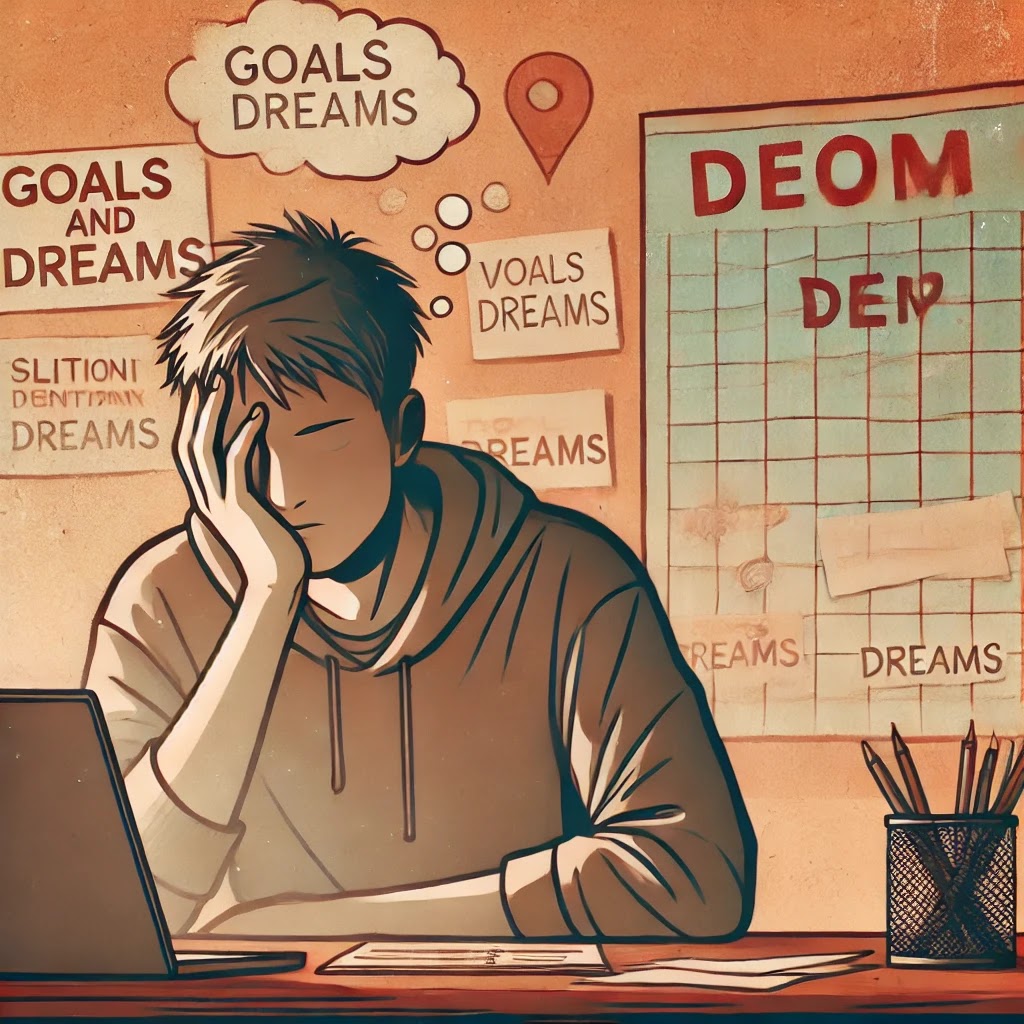
For a long time, I believed my inner voice was simply… me.
Who else could it be?
Then one day, while listening to myself after making another mistake, I realized something unsettling.
Some of my thoughts didn’t sound like me at all.
They sounded like my old mathematics teacher.
Others sounded like a relative who worried about everything.
A few sounded suspiciously like advertisements.
Some sounded like headlines.
Others sounded like classmates I’d completely forgotten.
It was as though my mind had become a crowded room where people from different chapters of my life were still arguing.
The strange part?
They were all using my voice.
Maybe you’ve noticed it too.
You hesitate before trying something new.
A thought appears.
“People like us don’t do things like that.”
Where did that sentence come from?
Who first decided what “people like us” were capable of?
Most of us never ask.
We simply obey.
As children, that’s perfectly understandable.
We have no choice.
A child cannot independently verify every belief about the world.
If a parent says,
“Fire burns.”
The child believes.
If a teacher says,
“Practice makes you better.”
The child believes.
If an older sibling says,
“You’re hopeless at drawing.”
The child often believes that too.
Children survive by trusting.
It’s one of the most beautiful features of childhood.
It’s also one of its greatest vulnerabilities.
Because children don’t only inherit eye colour.
They inherit expectations.
Some become gifts.
Others become invisible chains.
I sometimes imagine childhood as arriving in the world with an empty backpack.
You don’t choose what goes inside.
Adults do.
One places confidence in it.
Another places fear.
Someone adds curiosity.
Someone else slips shame into a side pocket.
Teachers contribute.
Friends contribute.
Culture contributes.
Religion contributes.
Television contributes.
The internet contributes.
By adulthood, the backpack is full.
So full, in fact, that we stop noticing its weight.
We simply call it “who I am.”
But here’s the beautiful thing.
Growing older gives us something childhood couldn’t.
The chance to unpack.
This, I think, is what adulthood is really about.
Not paying taxes.
Not buying a house.
Not turning thirty or forty.
Adulthood begins the moment you become curious about your own mind.
The moment you stop asking,
“What do I believe?”
and start asking,
“Why do I believe it?”
Those are entirely different questions.
The first collects beliefs.
The second investigates them.
And investigation is the beginning of freedom.
The older I get, the less interested I become in being right.
I’m far more interested in discovering where my certainty came from.
Whenever I hear myself say,
“I could never…”
I become curious.
Never?
Based on what?
Evidence?
Or repetition?
Whenever I hear,
“That’s just the way I am,”
I pause.
Is it?
Or is that simply the longest-running story I’ve ever told myself?
Our minds love certainty.
Even when certainty is wrong.
Because certainty feels safe.
Questions don’t.
Questions are uncomfortable.
They dismantle.
They rearrange.
They force us to admit that some of the walls we’ve been leaning against were built by people who are no longer even in our lives.
One of the quiet tragedies of growing up is that many people continue living according to rules written by people who never intended them to be permanent.
A teacher’s frustration becomes a lifelong insecurity.
A parent’s fear becomes a child’s caution.
A careless joke becomes someone’s identity.
One failed exam becomes proof of limited intelligence.
One heartbreak becomes evidence that love isn’t worth pursuing.
The event ends.
The suggestion survives.
That’s how invisible beliefs work.
They don’t shout.
They settle.
Like dust.
Year after year.
Until one day you mistake them for the furniture.
And perhaps that’s why understanding placebo, nocebo and Pygmalion matters so much.
Not because you’ll win trivia nights.
Not because you’ll impress friends with psychological terminology.
But because they reveal something profoundly hopeful.
If expectations can be learned…
they can also be questioned.
If they can be questioned…
they can sometimes be changed.
And if they can be changed…
perhaps the story isn’t over after all.
Perhaps the narrator still has a choice.
Perhaps…
so do you.
Filtering Self Suggestion: Part 2 – Becoming the Sculptor of Your Own
There is a sentence I’ve grown to dislike over the years.
“This is just who I am.”
At first, it sounds like confidence.
Acceptance.
Authenticity.
But if you listen closely, it often carries something else.
Resignation.
“I’m just bad with people.”
“I’m just unlucky.”
“I’m just not disciplined.”
“I’m just an average student.”
“I’m just not creative.”
Perhaps some of those statements are true today.
But are they true forever?
That’s a different question.
And somewhere between those two questions lies the rest of a person’s life.
When I was younger, I thought personality was something you discovered.
Like buried treasure.
Somewhere inside me was the “real me,” waiting to be uncovered.
The older I’ve become, the less convinced I am.
I still believe we are born with different temperaments.
Some people are naturally more outgoing.
Others more cautious.
Some are naturally curious.
Others prefer familiarity.
But layered on top of that is something equally powerful.
Experience.
And experience doesn’t merely happen to us.
It teaches us.
The problem is that experience is an impatient teacher.
It loves overgeneralizing.
One rejection becomes:
“Nobody likes me.”
One failed business becomes:
“I’m not entrepreneurial.”
One poor speech becomes:
“I’m not a public speaker.”
Our brains evolved to find patterns.
Sometimes they find them too quickly.
Think back to the Pygmalion story.
A sculptor looked at a block of ivory and saw something no one else could see.
Potential.
Psychology borrowed that story because it captured a profound truth.
People often grow into the expectations surrounding them.
A teacher who sees potential teaches differently.
A coach who expects improvement coaches differently.
A parent who believes a child is capable parents differently.
But eventually something changes.
The teacher leaves.
The coach retires.
Parents grow older.
Managers change.
Friends move away.
Life quietly hands you the chisel.
And then a remarkable question appears.
Can you look at yourself with the same hopeful eyes that the best mentors once looked at you?
Not with arrogance.
Not with fantasy.
With possibility.
I don’t think becoming your own Pygmalion means standing in front of a mirror chanting affirmations.
Life is usually more complicated than that.
Some mornings you won’t feel confident.
Some days you’ll fail.
Some weeks you’ll doubt yourself.
That’s normal.
The goal isn’t to become endlessly optimistic.
The goal is to become fair.
Imagine a young athlete you’ve been coaching for years.
They lose an important match.
Would you tell them,
“Well, I guess you’re a failure.”
Of course not.
You’d probably say,
“You had a bad day.”
“So let’s learn from it.”
Yet many of us refuse to offer ourselves the same generosity we extend so freely to others.
We’re compassionate coaches for everyone else.
We’re ruthless dictators to ourselves.
One of the simplest changes I’ve tried making is replacing identity with behaviour.
Not because words are magical.
Because words organize thought.
Instead of saying,
“I’m lazy,”
I try saying,
“I avoided doing the work today.”
The first sentence describes a person.
The second describes an action.
People feel permanent.
Actions can change tomorrow morning.
Instead of,
“I’m terrible with money,”
perhaps,
“I’ve never learned how to manage money well.”
One sentence closes the book.
The other begins a chapter.
Language doesn’t merely communicate.
It frames reality.
And eventually, the reality we frame becomes the reality we inhabit.
This is where the placebo effect returns.
Not as a sugar pill.
As a daily practice.
Think about rituals.
The mug you always use while writing.
The bench where you read every Sunday morning.
The shoes you wear when you go for a run.
The music that plays before an important presentation.
None of these objects contain motivation.
They contain memory.
Your brain learns associations.
Over time, those small rituals become signals.
“It’s time to focus.”
“It’s time to create.”
“It’s time to perform.”
People sometimes dismiss rituals as superstition.
I think they misunderstand them.
A good ritual isn’t trying to change reality.
It’s trying to prepare the mind that will meet reality.
The opposite is true as well.
We all carry little nocebos.
Maybe yours sounds like this.
“I’m too old.”
“I’m always behind.”
“Everyone else has figured life out.”
“I’ll probably mess this up.”
Those sentences don’t predict the future.
They rehearse it.
Every repetition is another practice session for a life you don’t actually want.
If placebo is rehearsal for hope…
Nocebo is rehearsal for defeat.
The tragedy is that many people rehearse defeat every single day without realizing they’re practicing.
Then there’s something we rarely discuss.
Environment.
We often imagine personal growth as an individual project.
Read better books.
Think better thoughts.
Build better habits.
All useful.
But incomplete.
Because environments have voices too.
Spend enough time with people who celebrate learning, and learning begins to feel normal.
Spend enough time with people who complain but never act, and complaining begins to feel reasonable.
A room can teach you.
A workplace can teach you.
A city can teach you.
A friendship can teach you.
So can a bookshelf.
So can your phone.
Ask yourself one simple question.
What is my environment constantly expecting from me?
Does it expect curiosity?
Or distraction?
Health?
Or convenience?
Growth?
Or comfort?
We rise—or sink—to the expectations built into the worlds we inhabit.
As I was writing these blogs, I kept thinking about a garden.
Not because it’s poetic.
Because it’s accurate.
A gardener doesn’t scream at flowers.
He doesn’t shame seeds for taking time.
He doesn’t compare the rose to the mango tree.
He waters.
He removes weeds.
He protects the soil.
Then he waits.
Human growth isn’t very different.
You cannot force confidence.
But you can create the conditions in which confidence grows.
You cannot command discipline.
But you can build an environment where discipline becomes easier.
You cannot order yourself to become a different person overnight.
But you can become the kind of gardener who patiently tends tomorrow’s version of yourself.
Perhaps that is what wisdom looks like.
Not demanding immediate transformation.
But consistently creating better conditions.
When we began this journey, we started with an inactive pill.
It seemed almost trivial.
By the end, we found ourselves talking about identity, childhood, teachers, advertisements, failure, hope, language, and the quiet conversations we have with ourselves every day.
That isn’t an accident.
Because beneath all these ideas lies one simple truth.
Human beings are shaped by expectations.
Some expectations heal.
Some wound.
Some liberate.
Some imprison.
Some come from doctors.
Some from teachers.
Some from parents.
Some from strangers.
Some from headlines.
Some from a single careless sentence spoken twenty years ago.
But the ones that matter most are the ones we continue repeating after everyone else has stopped speaking.
One day your parents won’t be there to encourage you.
Or discourage you.
One day your teachers will become memories.
Your coaches will no longer stand on the sidelines.
Your friends won’t witness every struggle.
The crowd will disappear.
The applause will fade.
The criticism will fade too.
One voice will remain.
It will greet you every morning.
It will accompany you through every success.
It will explain every failure.
It will comfort you after every heartbreak.
Or deepen the wound.
It will remind you why you began.
Or persuade you to quit.
You will spend more time listening to that voice than to anyone else who has ever lived.
So choose it carefully.
Not because positive thinking solves everything.
It doesn’t.
Reality still matters.
Effort still matters.
Luck still matters.
Other people still matter.
But the voice inside your head determines how you meet all of them.
It decides whether failure becomes information or identity.
Whether criticism becomes correction or condemnation.
Whether success becomes gratitude or arrogance.
Whether tomorrow feels like possibility or repetition.
Long before you change your career…
your relationships…
your health…
or your life…
you change the conversation that accompanies them.
Perhaps that is the greatest lesson hidden inside placebo, nocebo, Pygmalion, and every invisible suggestion we’ve explored together.
We are not merely shaped by the world.
We are shaped by the meaning we repeatedly give the world.
And somewhere along the journey, whether we notice it or not, each of us inherits the sculptor’s chisel.
From that moment on, life asks only one question.
What kind of voice will shape the person you are still becoming?
If someone were to ask me what this entire series was about, I wouldn’t say it was about placebo, nocebo, or the Pygmalion effect.
I’d simply say this:
We become, not only what we experience, but what we repeatedly expect.
The world will spend your entire life offering you suggestions.
Some will make you stronger.
Some will make you smaller.
Wisdom isn’t learning how to silence the world.
Wisdom is learning which voices deserve to become your own.
For four blogs, we’ve been looking at the same mountain from different sides.
The placebo effect taught us that my expectations can influence my body, my performance, and the way I experience life.
The nocebo effect reminded us that those same expectations, when rooted in fear, can quietly become obstacles we mistake for reality.
The Pygmalion effect showed us that your expectations of me can shape the person I become.
The Golem effect warned us that low expectations—whether from others or ourselves—can slowly shrink our potential.
And perhaps the most important lesson of all is this:
Eventually, the doctor leaves.
The teacher leaves.
The coach leaves.
The parent lets go.
Society grows quieter.
The advertisements fade.
The applause disappears.
So does the criticism.
One voice remains.
The one that has listened to every success…
every failure…
every heartbreak…
every dream.
Your own.
From that day onward, you become the placebo, the nocebo, the Pygmalion, and the Golem in your own life.
You become the expectation that heals…
or the expectation that hurts.
You become the sculptor who patiently reveals the masterpiece…
or the one who never believes it exists inside the stone.
Choose your voice with care.
Because long before it changes your future…
it changes the person who walks into it.