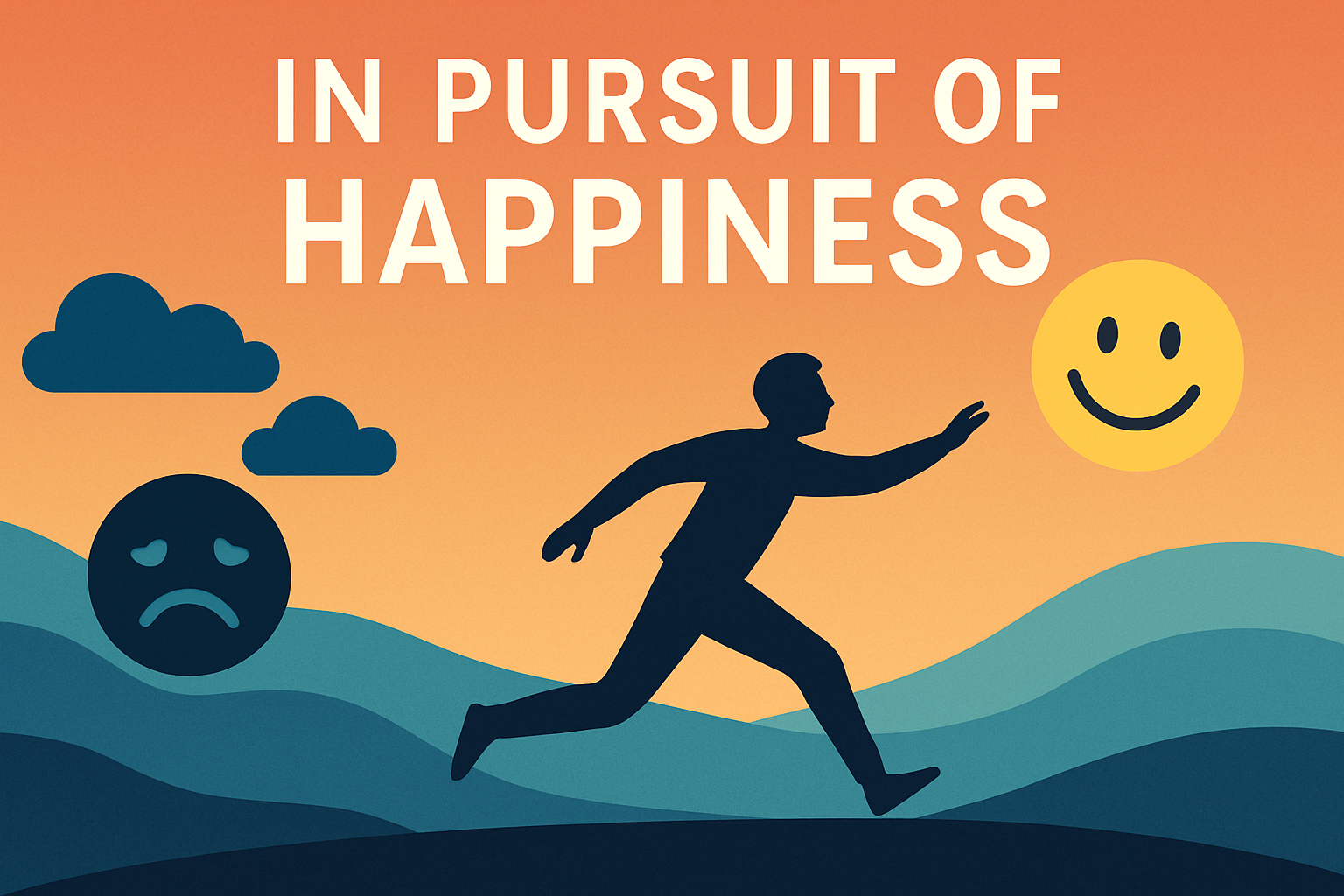
Section 1 – Shiny Object Syndrome: Why You Keep Chasing New Things—and How to Stop

Have you ever been completely excited about a new idea, only to lose interest a few weeks later?
Maybe you decided to start exercising, bought the shoes, downloaded the fitness app, and planned your new routine. Then you discovered a different workout program that promised faster results. Suddenly, the first plan didn’t seem quite right anymore.
Or perhaps you started learning something new, invested time and money into it, and then came across another skill that seemed even more useful.
That pattern has a name: Shiny Object Syndrome.
Shiny Object Syndrome is the tendency to become strongly attracted to new ideas, opportunities, projects, tools, or goals and repeatedly shift your attention toward them before giving your existing commitment enough time to produce meaningful results.
The “shiny object” doesn’t have to be a physical object. It can be anything that feels new and promising:
- A new business idea
- A new career possibility
- A new productivity system
- A new course or certification
- A new investment opportunity
- A new creative project
- A new app, tool, or technology
The problem isn’t curiosity. Curiosity can be one of your greatest strengths.
The problem begins when novelty repeatedly defeats commitment.
Why does it happen?
Our brains naturally pay attention to new and potentially rewarding things. A fresh possibility creates anticipation: Maybe this is the thing that finally works.
There is also something psychologically attractive about starting.
Starting feels exciting. Finishing often requires patience.
At the beginning of a project, everything is possible. You imagine the successful version of yourself, the finished book, the thriving business, the transformed body, or the new career.
Then reality arrives.
Progress becomes slower. Problems appear. Repetition becomes necessary. The initial excitement disappears.
That is often the moment when another opportunity suddenly looks irresistible.
The new option offers something the current one no longer does: excitement without the accumulated frustration.
Over time, this can change how a person behaves.
Instead of becoming someone who patiently builds, they become someone who constantly searches.
They collect beginnings rather than endings.
They know a little about many things but struggle to develop mastery in one.
They may even feel productive because they are always researching, planning, buying, learning, or preparing. Yet when they look back, they discover a frustrating pattern:
A lot of movement. Not enough progress.
What does Shiny Object Syndrome look like in real life?
Example 1: The aspiring entrepreneur
- Monday: “I’m going to start an online course.”
- Wednesday: discovers affiliate marketing.
- Next week: watches videos about dropshipping.
- A month later: becomes fascinated by AI businesses.
- Two months later: starts researching YouTube channels.
None of these ideas is necessarily bad.
The problem is that the person never stays with one long enough to find out whether it could actually work.
Example 2: The career learner
Someone decides to improve their communication skills and begins a public-speaking course.
After two weeks, they discover a course on psychology.
Then they become interested in coaching.
Then they start learning video editing.
Then they decide that writing is the real opportunity.
Each decision feels reasonable in isolation. But six months later, they have five half-finished courses and no deeply developed skill.
That is the hidden cost of Shiny Object Syndrome.
You don’t necessarily lose your opportunities. You lose the compounding effect of staying with one opportunity long enough.
Section 2 — The deeper cost: when switching starts shaping who you become
Shiny Object Syndrome isn’t simply a problem of poor time management. If the pattern continues for years, it can gradually influence the way you see yourself.
You begin to develop an identity around starting rather than finishing.
You become the person who is always preparing for the next chapter but rarely staying long enough in the current one to see what it can produce.
And that can quietly damage self-trust.
Every abandoned project leaves behind a small psychological residue: I didn’t follow through again.
One unfinished project may mean nothing. Ten or twenty can change the story you tell yourself.
You may start thinking:
- “I’m interested in everything but good at nothing.”
- “I never seem to stick with anything.”
- “Maybe I’m not disciplined.”
- “I always lose motivation.”
- “Maybe the next opportunity will finally work.”
That last thought is particularly powerful.
Instead of asking, “How can I make this work?”, you begin asking, “What else should I try?”
The core drawbacks
Shiny Object Syndrome can gradually produce several problems:
- Fragmented attention: Your mental energy gets divided among too many priorities.
- Shallow learning: You repeatedly reach the beginner stage without progressing into mastery.
- Incomplete projects: Important goals remain permanently “almost started.”
- Wasted resources: Courses, subscriptions, equipment and opportunities accumulate without sufficient return.
- Decision fatigue: Constantly choosing what to pursue next becomes exhausting.
- Reduced self-trust: Repeatedly breaking commitments to yourself can weaken confidence.
- Lost compounding: Skills, relationships, knowledge and results often become more valuable with sustained effort. Constant switching interrupts that accumulation.
Perhaps the most frustrating consequence is that you can be genuinely talented and still underperform your potential.
Not because you lack ability—but because your attention keeps moving before your ability has had time to compound.
How do you know if you have it?
Look for a pattern rather than one isolated incident.
Ask yourself:
Do I frequently abandon projects when the initial excitement disappears?
Do I regularly convince myself that a new method, course, career path or business idea is what I really need?
How many unfinished projects are currently sitting around me?
Do I spend more time researching the next opportunity than executing the current one?
When something becomes difficult or repetitive, do I suddenly discover something else that seems more exciting?
There is another useful test:
When a new opportunity appears, do I evaluate it—or immediately feel compelled to pursue it?
You can also observe the pattern in other people. Someone may constantly announce new plans, buy tools, enroll in courses, change strategies and talk enthusiastically about their next project—but have remarkably few completed outcomes.
That doesn’t automatically mean they have Shiny Object Syndrome. Life circumstances change, and sometimes changing direction is exactly the right decision.
The clue is repetition without completion.
The question isn’t, “How many interests do I have?”
It’s:
“How often do I abandon something because it stopped being exciting?”
Section 3
Section 3 – How to Overcome Shiny Object Syndrome
The solution to Shiny Object Syndrome isn’t to stop having new ideas.
That would be unrealistic—and unnecessary.
The goal is to stop allowing every new idea to control your attention.
You can be curious without being distracted. You can explore new possibilities without abandoning the path you’re already on.
The key skill is concentration.
1. Choose a primary goal
At any given time, decide what deserves the majority of your attention.
Not ten goals. Not five “priorities.”
One primary goal.
You may have other responsibilities, but there should be one outcome that receives your best mental energy.
Ask yourself:
“If I could make significant progress on only one thing over the next 90 days, what would matter most?”
Write it down.
This becomes your anchor whenever something new catches your attention.
2. Create a “Not Now” list
A new idea doesn’t have to be rejected simply because you aren’t pursuing it today.
Create a place to capture it.
When something interesting appears, write it down and return to your current work.
This creates psychological distance.
You are telling your brain:
“I’m not losing this idea. I’m simply not acting on it yet.”
Review the list once a week or once a month. Many ideas that seemed urgent will no longer seem important.
3. Use a commitment window
Don’t judge a project every few days.
Give it a predetermined period before deciding whether to continue.
It could be 30, 60 or 90 days depending on the goal.
During that period, your job is not to ask, “Is this still exciting?”
Ask:
“Am I making measurable progress?”
This distinction is crucial.
Excitement is temporary. Progress is evidence.
4. Practice the art of concentration
Concentration is not something you either possess or lack. It is a behaviour you can strengthen.
Start small.
Choose one task. Remove unnecessary distractions. Set a defined period—perhaps 25 or 45 minutes—and work only on that task.
When your mind says, “Let’s check this,” or “Maybe I should work on that instead,” don’t immediately obey it.
Notice the thought.
Then return.
That tiny act of returning is the practice.
Every time you bring your attention back, you are strengthening your ability to concentrate.
5. Learn to tolerate boredom
This may be the hardest part.
Every meaningful pursuit eventually becomes repetitive.
The writer has to edit.
The entrepreneur has to follow up.
The professional has to practise.
The musician has to rehearse the same passage again.
The person getting fit has to repeat the workout.
Mastery often begins where novelty ends.
Instead of interpreting boredom as a signal that you’ve chosen the wrong path, sometimes recognise it for what it is: the ordinary middle of the journey.
6. Use a switching rule
Before abandoning an existing project for a new one, ask three questions:
- What evidence tells me the current path isn’t working?
- Is the new opportunity genuinely better, or simply newer?
- What will I lose if I switch now?
If you cannot answer those questions clearly, don’t switch yet.
Give yourself 24 hours—or longer—before making the decision.
A little delay can prevent an impulsive change from becoming another unfinished project.
Concentration is a form of self-respect
Ultimately, overcoming Shiny Object Syndrome is less about controlling every thought and more about deciding which thoughts deserve your action.
You will always encounter something new.
Another idea will appear.
Another person will announce an exciting opportunity.
Another technology will promise to transform your work.
You don’t have to chase all of them.
Your attention is a limited resource.
The ability to say “Interesting—but not now” may be one of the most valuable skills you can develop.
Because the person who can stay focused long enough to finish, learn, improve and repeat eventually gains something the constant switcher rarely gets:
momentum.
Section 4 – Find Your Direction, Train Your Mind, Build Your Habits
One of the strongest protections against Shiny Object Syndrome is knowing what actually matters to you.
When you don’t have a clear sense of direction, almost every opportunity can look important.
A new course promises a better career. A new business idea promises financial freedom. A new hobby promises excitement. A new technology promises to make everything easier.
Without a clear destination, you keep changing vehicles.
Finding your genuine interests, strengths and values gives you something to measure new opportunities against.
Ask yourself:
- What kind of work makes me lose track of time?
- What problems do I genuinely enjoy solving?
- What would I continue learning even if nobody applauded me for it?
- Which activities have remained interesting to me over the years?
- What kind of contribution do I want my work to make?
Passion doesn’t always arrive as a lightning bolt.
Sometimes it develops after you become good at something.
That’s why don’t wait for perfect certainty. Choose a meaningful direction, work at it consistently, and allow deeper interest to develop through experience.
Train your mind to stay
Concentration is a mental habit, and like any habit, it becomes stronger through repetition.
Start by giving yourself periods of uninterrupted attention every day.
It could be 20 minutes in the beginning.
Put the phone away. Close unnecessary tabs. Work on one meaningful task. When your mind wanders, bring it back.
Don’t judge yourself for getting distracted.
Returning is the exercise.
Tomorrow, do it again.
Gradually increase the duration.
You are teaching your brain that an interesting thought does not require immediate action.
That is a powerful shift.
You can notice a new idea without following it.
You can feel bored without quitting.
You can become curious without changing direction.
Build habits that make focus automatic
Willpower is useful, but a well-designed routine reduces the amount of willpower you need.
Create a few simple rules:
- Decide your most important task the night before.
- Give it your best attention before getting lost in less important activities.
- Keep a notebook or digital list for new ideas rather than acting on them immediately.
- Set specific times for checking email, social media and messages.
- Review your goals once a week.
- Finish or deliberately close old projects before opening several new ones.
The objective isn’t to create a rigid life.
It’s to create enough structure that your impulses don’t make every decision for you.
Give your future self a chance
Shiny Object Syndrome keeps asking, “What’s next?”
A focused life asks a different question:
“What can I build if I stay?”
That question can change everything.
You don’t need to reject every new opportunity. You don’t need to become obsessed with one goal forever. You simply need to become more deliberate about when you change direction.
The next time something shiny catches your attention, pause.
Write it down.
Look at your current goal.
Ask whether the new opportunity deserves your attention—or merely has your attention.
Then return to the work.
Because meaningful results rarely come from finding the perfect opportunity.
They come from giving a worthwhile opportunity enough of your time, attention and persistence to become something real.
Your next breakthrough may not require another idea.
It may require you to stay with the good idea you already have.
Choose. Focus. Stay. Finish. Then decide what comes next.Trataka Guide: How to Practise Correctly for Focus Part 4How to Handle Public Insults: 5 Tips to Stay Calm Keeping Your Self-Respect