Part 4: How to Practise Trataka Correctly – A Step-by-Step Guide for Beginners
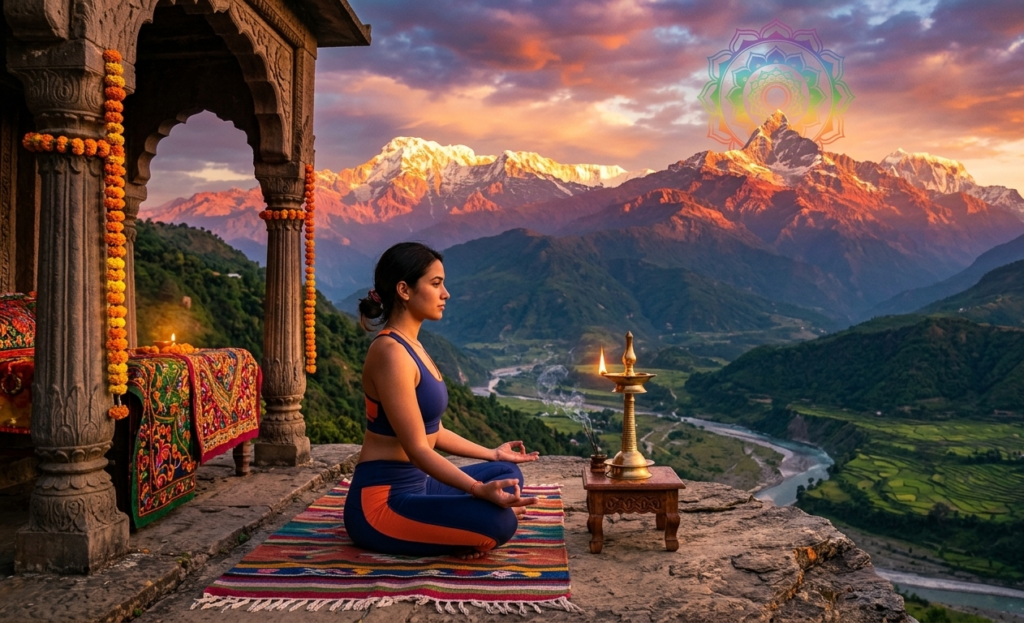
Knowing about Trataka is one thing. Experiencing its benefits is another. Like any mental training technique, consistency matters far more than intensity. Five minutes of correct daily practice is far more valuable than thirty minutes of forced concentration once a week.
The purpose of Trataka is not to prove how long you can stare without blinking. It is to cultivate relaxed, effortless attention. Approach the practice with curiosity rather than determination.
Preparing the Space
The environment plays a surprisingly important role. Choose a quiet place where you are unlikely to be disturbed. Switch your phone to silent mode and reduce unnecessary distractions. If you are practising Candle Trataka, dim the lights so the flame becomes the primary visual focus. Avoid rooms with fans or strong air currents that cause the flame to flicker excessively. For Bindu Trataka, use a plain wall free from pictures, decorations, or bright colours. A calm environment helps the mind settle more quickly.
Choosing the Right Time
Traditionally, Trataka is practised during Brahma Muhurta—the quiet period before sunrise—or in the evening after sunset. From a modern perspective, both times offer advantages. Morning practice prepares the brain for a focused day ahead. Evening practice helps release the mental clutter accumulated throughout the day and may promote better sleep. Whichever time you choose, try to practise consistently. The brain responds well to routine.
Sitting Comfortably
You do not need to be an expert yogi. Sit in any stable, comfortable posture:-
Sukhasana (Easy Pose)
Padmasana (Lotus Pose), if comfortable
Vajrasana (Thunderbolt Pose)
On a straight-backed chair with both feet flat on the floor Keep your:
Spine naturally upright
Shoulders relaxed
Head level
Jaw unclenched
Hands resting comfortably on your thighs or knees
A stable body encourages a stable mind.
Positioning the Object
Whatever object you choose, ensure it is:
At eye level
Approximately one metre away
Clearly visible
Stable and unmoving
If you must tilt your head up or down, adjust the object’s height rather than your posture.
Comfort reduces unnecessary muscle tension.
The Three Stages of Trataka
Although it appears simple, Trataka unfolds in three distinct stages.
Stage One: External Gazing (Bahir Trataka)
Open your eyes and gently focus on the chosen object.
Allow your breathing to remain natural.
Avoid analysing the object. Simply observe.
Resist the temptation to blink unnecessarily, but never force your eyes beyond their natural limits.
Soon you may notice:
The urge to blink
Wandering thoughts
Slight watering of the eyes
Increased awareness of your breathing
All of these are perfectly normal.
Stage Two: Internal Visualization (Antar Trataka)
Once the eyes become tired or tears appear, gently close them.
You may notice an afterimage floating before your closed eyes.
Observe it quietly.
Do not chase it or try to control it.
Eventually the image will fade naturally.
Remain relaxed throughout.
Stage Three: Rest
Allow the eyes to rest completely.
Take several slow breaths.
Notice how your mind feels.
Many practitioners describe this stage as surprisingly peaceful.
The silence following concentrated attention is often where the deepest relaxation occurs.
How Long Should You Practise?
Beginners often assume that longer is better. It isn’t. A gradual approach allows both the eyes and the brain to adapt comfortably. A practical progression looks like this:
Week 1- 3 – 5 minutes
Week 2- 5 – 8 minutes
Week 3- 8 – 12 minutes
After one month – 10–15 minutes
Experienced practitioners under proper guidance may extend their sessions, but there is rarely a need for beginners to exceed fifteen minutes. Quality always matters more than duration.
What Should You Do With Your Breathing?
One of the most common questions is whether Trataka requires a special breathing technique. The answer is simple. No. Allow your breathing to remain slow, quiet, and effortless. Trying to control both your breath and your gaze simultaneously often creates unnecessary tension. As concentration deepens, breathing usually becomes slower on its own. This natural slowing is often a sign that the nervous system is shifting into a calmer state.
Common Experiences During Practice
Many beginners become concerned when unusual experiences arise. Most are completely normal.
You may notice:
Watering eyes
A glowing afterimage
Temporary blurring of the object
The flame appearing larger or smaller
Gentle swaying of the image
Increased awareness of thoughts
Deep relaxation
Time seeming to pass more quickly
These experiences usually become less distracting with regular practice.
Observe them with curiosity rather than attachment.
Common Mistakes Beginners Make
Forcing the Eyes
The eyes should feel challenged, not tortured. Sharp pain is never part of correct practice.
Competing With Yourself
Trying to beat yesterday’s staring time defeats the purpose. Trataka is meditation, not a contest.
Practising While Exhausted
Very late at night, fatigue may cause drowsiness rather than concentration. Choose a time when you are alert but relaxed.
Frequent Position Changes
Every movement interrupts attention. Find a comfortable posture before beginning.
Expecting Instant Results
The benefits of Trataka develop gradually. Just as physical fitness requires regular exercise, mental steadiness develops through repeated practice.
Safety Precautions
Although Trataka is generally safe, certain precautions are important. Avoid or postpone practice if you have:
An active eye infection
Recent eye surgery
Severe dry eye syndrome
Acute glaucoma unless cleared by your ophthalmologist
Significant retinal disease
If you wear contact lenses, remove them before practising Candle Trataka. Children may practise for short durations under supervision, while older adults should begin gently and stop if discomfort develops. If you experience persistent eye pain, headaches, or visual disturbances, discontinue the practice and consult an eye-care professional.
A Gentle Reminder
Perhaps the most beautiful lesson of Trataka has nothing to do with the eyes. It teaches patience. In a world that rewards speed, Trataka invites stillness. In a culture of endless distraction, it cultivates presence. Every session becomes a quiet reminder that the mind does not become steady through force. It becomes steady through gentle, consistent practice. And sometimes, the most profound transformations begin with something as simple as learning to look without constantly looking away.
Refer earlier posts below on Trataka for better understanding of the concept.
Trataka Part 3
Trataka Part 2
Trataka Part 1
Explore the Books for different interesting topics.
Refer: